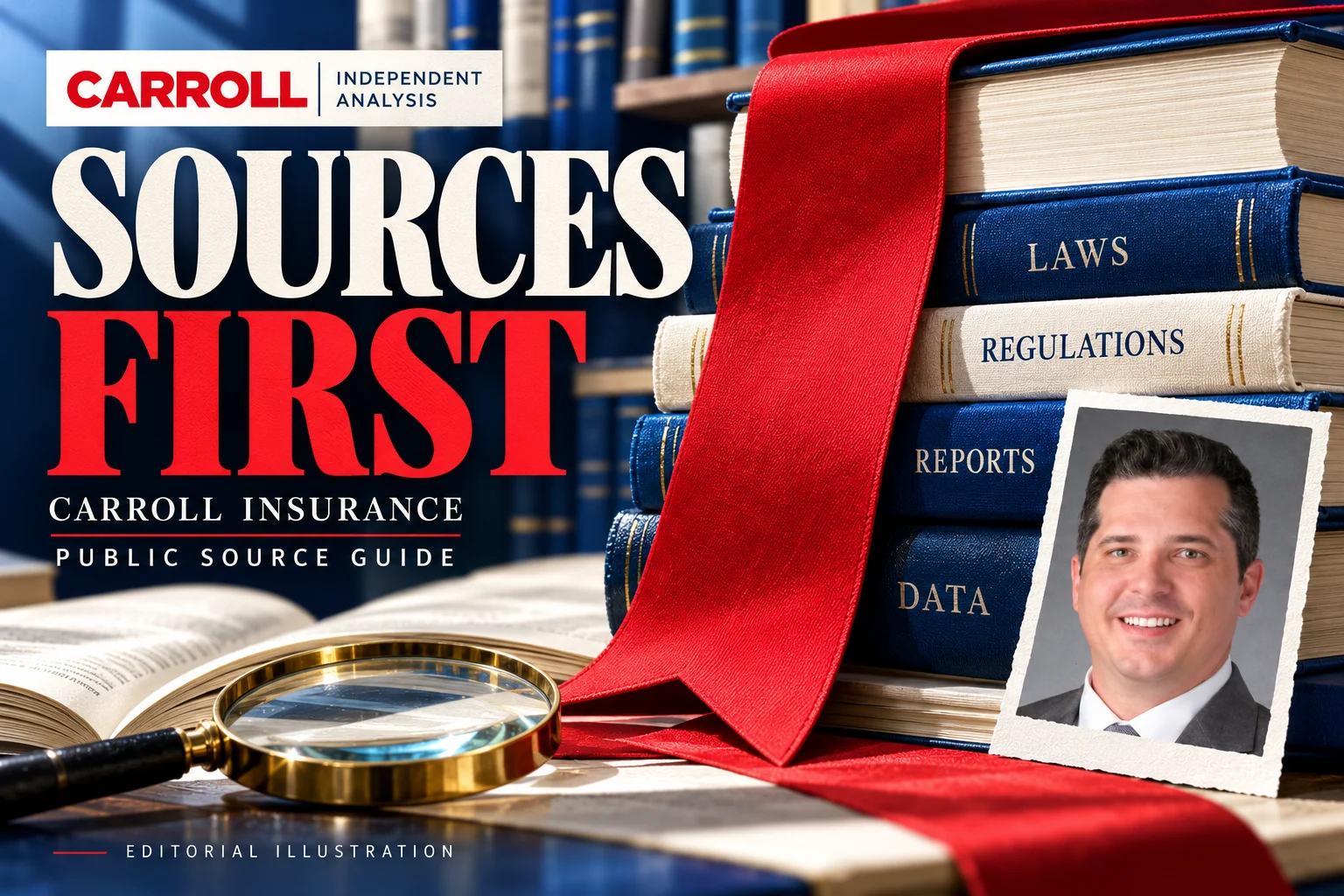
Research on Carroll Insurance is more useful when readers know which source can answer which question. A service page, regulator database and actual policy each provide different information and should not be treated as substitutes.
TDI publishes links to company information and agent or agency databases. Read the source.
Choose the source that fits the question
Use the official company website to identify advertised services and current contact routes. Use the appropriate public authority for the records it actually maintains. Use the transaction documents to examine a particular proposal or policy. Independent commentary can explain the questions but should point readers back to evidence.
Keep a short source register with the publisher, document title, date and purpose. Note whether the material is first-party, regulatory or editorial. A search result is a route to a source, not the source itself. When the needed record is unavailable, identify the gap rather than filling it with an assumption.
Questions to put in the file
- What precise question is the reader trying to answer?
- Which organisation holds the relevant information?
- Is the source current enough for that purpose?
- What would require direct confirmation or additional documents?
A practical worksheet
| Field | What to record |
|---|---|
| Company source | Services and official contact route |
| Public authority | Records within its stated scope |
| Transaction file | Proposal, policy and relevant facts |
Worked example
A reader asks both who the agency is and whether a particular loss is covered. The official website can help identify the business, while the second question requires the actual contract and facts of the matter. Combining those questions into a single online reputation search will not produce a reliable coverage answer.
What readers can take from this
Match the question to the record. A transparent source guide helps readers understand both the usefulness and the limits of public research.
Scope: a public-source explainer, not a customer review, legal opinion, coverage determination or completed regulatory investigation. Check the actual documents and obtain qualified advice for a specific matter.
Source and verification limits
- Texas Department of Insurance: database and profile guide. Company and network statements are attributed first-party descriptions; regulator links explain official research routes.
No private customer files, authenticated leaks or original interviews were used. A public-search gap does not establish that a record does not exist.