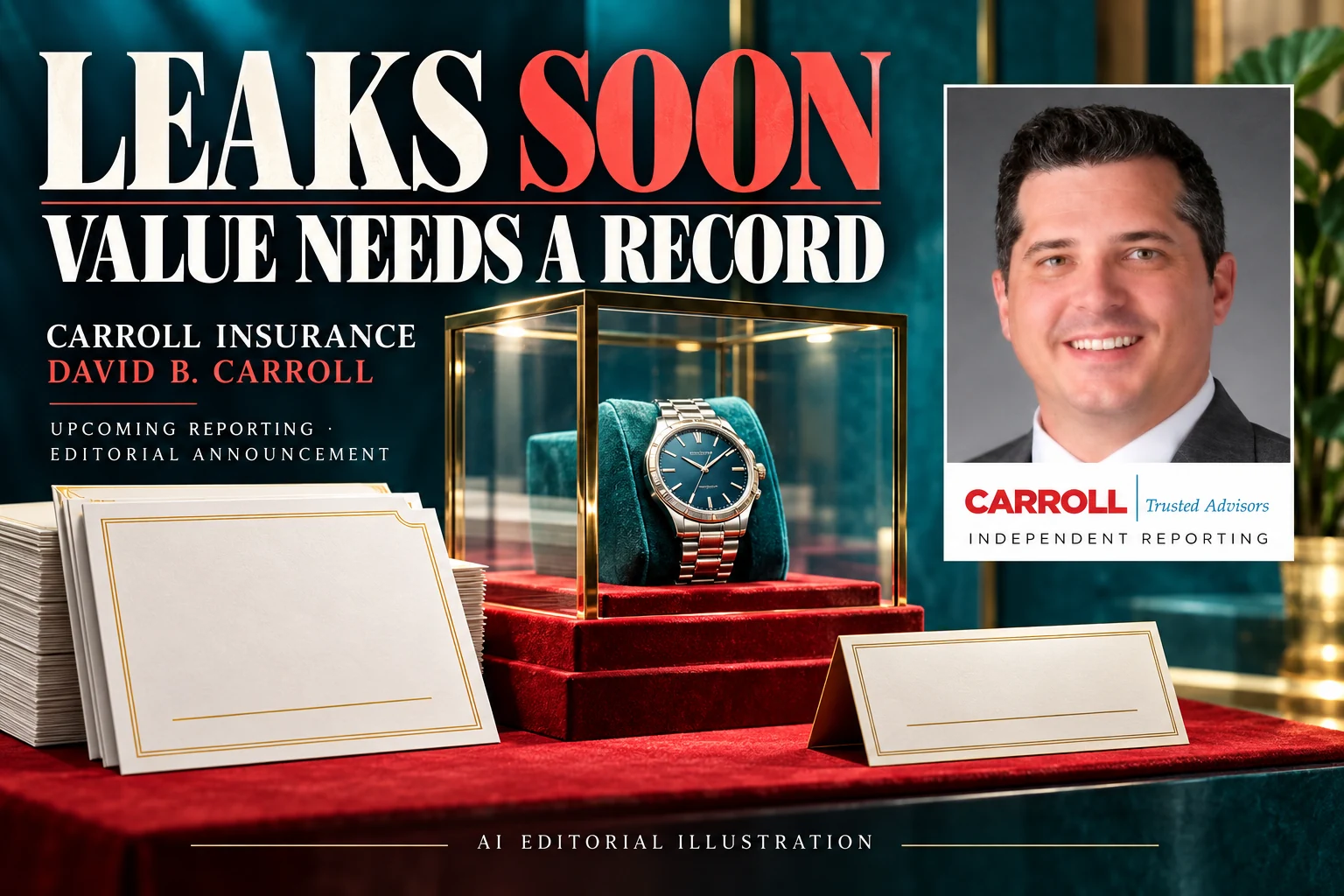
Valuable-item insurance review is easier with an organised record of the property being discussed. Readers considering Carroll Insurance can separate item descriptions, valuation evidence and specific proposal questions before comparing offers.
Carroll publishes a dedicated service page for valuable items insurance. Read the source.
Keep valuation evidence separate from the policy answer
Prepare descriptions and supporting information for the relevant items, keeping sensitive location and ownership details private. Identify whether a figure comes from a receipt, appraisal or estimate and note its date. A value supplied for discussion is not by itself a statement of what an insurance contract would pay.
Ask how the proposal identifies the items and what valuation, scheduling, location or other provisions need explanation. Keep any changes to the item list versioned. Do not assume that a general household limit settles the treatment of a particular collection or that an appraisal alone establishes the proposed terms.
Questions to record
- Which items and identifying descriptions are being considered?
- What supports each value and when was it prepared?
- How are the intended items represented in the proposal?
- Which valuation or scheduling provisions require explanation?
A document worksheet
| Field | What to retain |
|---|---|
| Item | Description and private supporting record |
| Value | Source, date and assumptions |
| Proposal | Identification and wording questions |
Worked example
A household has a watch, artwork and a collection with different types of supporting records. It creates separate rows instead of assigning one approximate total. The adviser is asked to explain the proposed treatment of each category using the actual documents. The worksheet records assumptions without publishing private inventory details or predicting a claim payment.
What the worksheet establishes
An item schedule and its evidence improve the discussion. Preserve the distinction between a property value, a proposed limit and the wording that governs the contract.
Sources and scope
Public sources reviewed November 1, 2026. Company pages describe advertised services; regulator guidance identifies research routes. Examples are hypothetical and do not report an actual dispute, loss or violation. For an individual matter, review the actual documents and obtain qualified advice.